

Education as the Most Effective Way to Break Gender Stereotypes
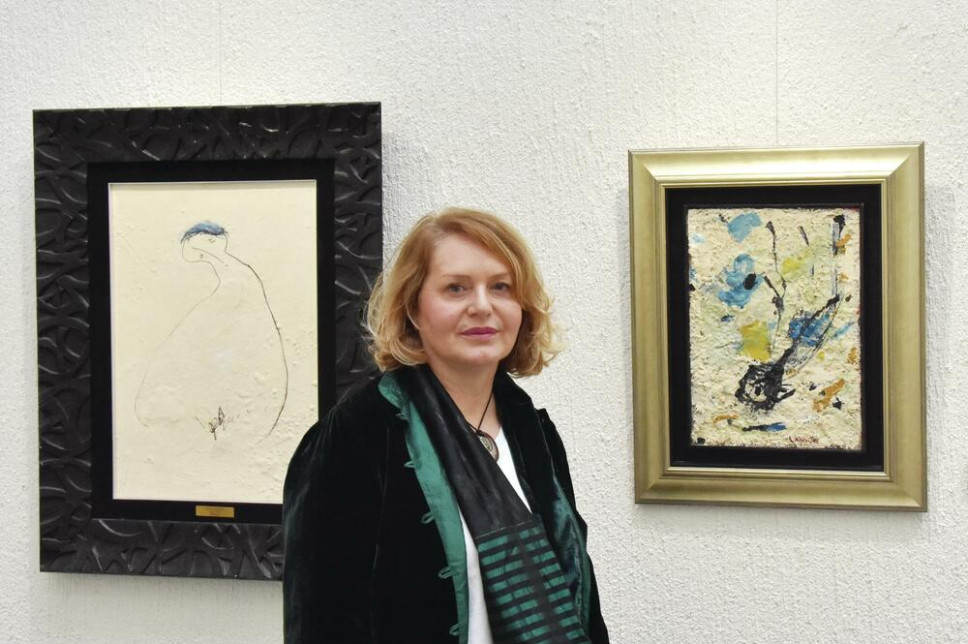
The greatest challenge still remains the very top of the pyramid—positions of power. The higher you climb, the fewer women there are. The social climate does not favour women.
The first generation of students of the Master’s Program in Gender Studies at the University of Montenegro has already entered the classrooms, marking an important moment for national higher education. A program that had been missing from the academic landscape for years has now become a reality—interdisciplinary, contemporary, and focused on understanding the social structures that shape equality, power, and public policy.
About what this breakthrough means for the University and the wider community, as well as about her own experience at the intersection of science and politics, speaks Dr. Branka Bošnjak, Advisor to the Rector for Strategic Policies and Sustainable Development and professor in the Gender Studies program. As a university professor, First Vice President of the Parliament of Montenegro, and long-standing Member of Parliament, she is one of the few women who has had an in-depth view of both the academic environment and state institutions from the inside.
In an interview for Vijesti Magazine – Leaders, Bošnjak opens discussions on gender equality, education, political culture, and the responsibility of new generations who are now entering the field of Gender Studies with the ambition to change society through knowledge rather than mere declarative commitment.
Academia and a Personal Professional Path
How do you view your professional path today—from academia, through work in Parliament, to returning primarily to a university career? Has your political experience changed the way you teach, research, or observe social processes?
I entered politics as a professionally fully accomplished person, which is rare in the Montenegrin social context. At that time, I was already financially secure and had behind me a well-established career as a university professor, professional training at prestigious universities—from the University of Birmingham, through the Catholic University of Leuven, one of the oldest in Europe, to La Sapienza University in Rome and the University of Ljubljana—as well as numerous scientific papers published in high-ranking international journals. I also had experience as a reviewer for a journal of a scientific institute from Cambridge, as well as nearly a decade of work as a coordinator for the American Council for International Education. All of this represented exceptionally rich experience in the fields of education and science.
Guided by a free mind and a sense of intellectual responsibility, I could not remain silent in the face of injustice and increasingly obvious social deviations that were pulling Montenegro backward. I wanted to contribute to positive change and give my contribution to the public good, because the levers of social change are found in politics. Unfortunately, although politics should be one of the most humane professions—where knowledge and personal integrity are put at the service of the community—in practice this is often not the case. Here, politics has become “dirty”; personal and party interests dominate, and one often hears the view that “everything is allowed in politics.” I do not accept such logic. Politics is indeed the art of the possible and implies compromise, but there must be a clear line below which one does not go, regardless of the cost. When you have your own stance, when you are principled and point out anomalies even within your own ranks, you become undesirable. This is especially difficult if you are a woman. Despite everything, I managed to achieve some small but very significant social advances, of which I am sincerely proud.
What we have today on the political scene is not what I fought for. That is why I often jokingly refer, with colleagues, to the need for “detoxification” from this kind of politics. Still, as before, I will continue to point out, in a civically responsible and public manner, all phenomena and deviations that are harmful to our society.
The experience and knowledge I gained through politics are invaluable, and I do not regret at all that I “entered the ring.” On the contrary, all of this will enable me to analyse political processes with students in a much more mature and critical way, with deeper understanding, using concrete examples from practice. I consider this a great personal and professional asset. Despite all social divisions, I see the University as a space that has largely remained protected from political contamination. That is precisely why it gives hope. Many high-quality and valuable initiatives are implemented at the University which, in the cacophony of political conflicts, often do not receive the public visibility they deserve.
Gender Studies – A New Stage for the Montenegrin Academic Community
The first generation of the Master’s Program in Gender Studies has already begun classes. What does the fact that this program has finally come to life mean to you? What do you consider its greatest value for students and for Montenegrin society as a whole? Do you see readiness among institutions to recognize knowledge from Gender Studies as a resource for improving public policies? Which prejudices about gender still dominate in academic discourse, and how can the new program dismantle them? What will be the key indicator that the program has truly succeeded and not remained merely a well-designed project?
With the appointment of the first woman to head the University of Montenegro’s Governing Board—the respected Professor Rajka Glušica, an extremely experienced and gender-sensitive intellectual—the initiative to establish a master’s program in Gender Studies was revived. This idea is not new; it had long been pursued by the late Professor Mileva Filipović, but unfortunately at that time there was neither sufficient understanding nor institutional space for its realization. This time, thanks to the high credibility and multidisciplinarity of the team gathered by Professor Glušica, which worked on the program’s accreditation, as well as the strong support of the Rector, Professor Vladimir Božović, success did not fail to materialize. In this academic year, the University of Montenegro enrolled the first generation of students in the Master’s Program in Gender Studies at the Institute for Interdisciplinary and Multidisciplinary Studies—eighteen of them—which represents significant interest and confirms the justification for establishing this program.
I believe that education is precisely the key to solving many social problems, especially to breaking down stereotypes and prejudices that are deeply culturally rooted in our society, particularly when it comes to gender equality. Only an equal society, a society of equal opportunities, can be truly developed, sustainable, and humane. With this civilizational step forward, we are catching up with the contemporary world. After all, we owe it to our female ancestors, who bravely and decisively paved the way toward freedom and equality, to give our own contribution in modern Montenegro—especially today, when misogyny, sexism, and discrimination against women are, unfortunately, still present in almost all spheres of life, and when violence against women and femicide are serious and frequent problems. As I have emphasized, the key to this contribution lies precisely in education, because it broadens horizons, frees us from fear, and builds tolerance.
I am confident that the professionals who will be educated through this study program will significantly contribute to the creation of public policies. We are encouraged by the fact that already in the first generation we have students coming from the media, the NGO sector, and public administration, and we believe that they will be genuine promoters of gender equality and will break down the barriers that traditional Montenegrin society, bound by patriarchal and tribal rules, has placed before us. Let us not forget how strong these constraints are—until recently, we still had a living “virgina” (sworn virgin) in these areas.
When it comes to the University of Montenegro, I must emphasize that significant progress has been made in the domain of gender equality. In addition to this historic step—the introduction of the Gender Studies program—the Gender Equality Plan 2022–2026 has been adopted. Recently, a Rulebook on Protection from Discrimination Based on Sex and Other Personal Characteristics, as well as on Protection from Sexual Harassment and Coercion, was adopted, applying to both employees and students. There is also an Office for Gender Equality within the Centre for Human Rights at the Faculty of Law. Of the three vice-rectors, two are women—very powerful and successful ones, Professors Irena Orović and Sanja Peković. More than 30% of deans are women, and they make up almost 50% of the members of the Senate, which represents a significant step forward. An annual award will be introduced for the best female student and the best young female scientist in STEM fields, with the aim of encouraging greater participation of women in science, technology, engineering, and mathematics—fields that have long been stereotypically associated with male careers.
The recently held, highly successful FUNK Festival—a month-long festival of art, science, and culture at the University of Montenegro—also had a strong gender dimension. One festival evening was dedicated to the position of women in the film industry; theatre performances that place women at the centre were staged; a women’s novel was promoted; and an unusual, avant-garde project stood out—a fashion show by Professor Milena Đukanović from the Faculty of Electrical Engineering, who uniquely combined technology, fashion, and art.
Another piece of good news from the University is that I initiated, with full support, opening of a kindergarten on the university campus, as part of the University for Children of students and employees. I hope that this project will soon come to life as well, as it carries a very important social and gender-sensitive dimension.
Women in Politics – The Experience of a Former MP
When you look back at your time in Parliament, which moments best showed what the political space for women in Montenegro looks like? Which obstacle for women within institutions is the most persistent—even if it may not be obvious at first glance? Do you think political processes would look different if more women with knowledge of gender issues participated in decision-making? How do you assess political parties’ attitudes toward women within their own ranks?
In Montenegro, a traditional pattern still dominates: the public sphere—especially politics as a space of power—is reserved for men, while women are left with the private sphere—home, children, family. Believe me, the percentage of colleagues in Parliament who genuinely do not share such an opinion is negligible. Publicly expressed views are another matter—often insincere, shaped to sound appealing and to create the impression of emancipation and modernity.
Pay attention to how often, especially certain conceited leaders, do not listen to what their female colleagues have to say. How often are they given the chance to ask the Prime Minister a question, to be part of negotiation teams when major issues are decided? They are absent—or almost absent.
If you have a clear stance and you are not blindly obedient to party leaders, then you are not desirable. But if you are ready to be obedient, and even to attack another woman on their behalf—then you are desirable. And that is where the personal choice comes in. Unfortunately, most choose the path of least resistance.
As a Vice President of Parliament, at one of the leadership meetings, I experienced the head of a large parliamentary caucus—irritated that the Women’s Club was productive and proposing solutions that pushed men out of their “comfort zone”—threaten me with the words: “I will pull my women out of that club of yours.” I replied: “Go ahead and pull them out, if they’re on a leash.” That very vividly shows that he saw his female colleagues as his personal property, something he could dispose of as he wished. And that is something we women must not allow—at any price.
When, away from the cameras, the discussion turns to electoral legislation and quotas as an affirmative measure for equal representation of women, the masks come off and various inappropriate comments can be heard. For many of them, quotas are an “evil” through which women supposedly enter their “territory.” This is also visible when compiling electoral lists, especially in coalitions, when squabbling begins over which party will “sacrifice itself” and place the first woman on the list.
But it is not only men who are to blame for not wanting to give up entrenched power—we women are also to blame when we allow it, when we are not united and supportive, and when we submit to the interests of party leaders.
I am deeply sorry, but it sends a very bad message that the Government recently decided—rather than reward two female directors for their impressive results, Isidora Damjanović, Director of the Music Centre, and Bojana Femić, Director of the Innovation Fund—to dismiss them after their terms ended. Even more discouraging is the fact that such a decision was proposed by female ministers—women. As if, when one woman succeeds and rises high, there is always another to “clip her wings.”
And successful women—hardworking, smart, emancipated, and educated—make this society better. They bring a more humane, more human note to politics, because I am convinced they have a stronger sense of the public good. They are more flexible, more inclined to compromise, and more tolerant. All of these are values that support the idea that democracy needs women.
Institutions, Public Policy, and Gender Equality
How do you assess the implementation of gender equality policies in Montenegro so far? Are decisions in institutions still made through the lens of stereotypes, even when there is awareness that they should not be? Can we expect substantive change in public policy without experts who understand a gender perspective?
The existing Law on Gender Equality is, unfortunately, “a dead letter on paper.” Few people truly respect it, including those who should be implementing it directly. A new law is currently being drafted, which should introduce punitive provisions, and perhaps that will be the incentive for the law to finally start being applied.
Still, certain steps forward exist, mostly thanks to pressure from the EU and the NGO sector. Some regulations already introduce a gender component—for example, the new Law on Business Organizations prescribes that there must be at least one woman on boards of directors.
A substantive change in public policy on the path to EU integration will have to be carried out with the support of experts who understand a gender perspective. European institutions are very strict about this and do not accept deviations—there have even been cases where a parliamentary delegation was sent back precisely because it included no women. That is the reality to which Montenegrin society will have to adapt.
As I said, things are changing, but the pace is still not satisfactory. Positions of power—political and economic—are still predominantly reserved for men. Still, the situation is incomparably better than it was in previous years.
Society, Stereotypes, and New Generations
How do you explain the fact that despite strategies and actions, gender stereotypes remain deeply rooted? Is the new generation of students more open and more willing to question traditional patterns of power and roles? Does today’s social climate motivate young women to take on responsible and visible positions?
Something that is deeply woven into a nation’s cultural code is not easy to change—time is needed. The most effective way to dismantle gender stereotypes is education. And not only higher education: it is important to start as early as kindergarten. We live in a time when young people have the world “in the palm of their hand”: information is easily accessible to them, social networks enable fast communication and connection with different cultures, so new generations are more open and more ready to accept new patterns of behaviour, especially when it comes to gender roles.
In my parents’ generation, for example, it was shameful for a man to take out the trash, vacuum the house, or even push a child in a stroller. Today, that is completely normal—new generations really are breaking stereotypes.
The greatest challenge still remains the very top of the pyramid—positions of power. The higher you climb, the fewer women there are. The social climate does not favour women: you need to build a strong “shield” to stay at the top, because very often your appearance is put in the foreground and commented on, rather than your expertise, knowledge, or ability.
Believe me, it often happened that even my friends, after my parliamentary appearances, commented on my hairstyle or outfit, as if they had not listened at all to what I was saying. Men, of course, are always listened to carefully. It is not easy, because many things that are taken for granted for men and come “by default,” we women have to fight for.
Still, there are more and more young women who refuse to be discouraged by such phenomena and who bravely break stereotypes—and that is truly encouraging. But along that path they must be ready for misogynistic and sexist comments that undermine every woman’s success, especially today, when everyone thinks they have the right to comment on you—particularly on social media, where all sorts of “half-world” characters have surfaced, ready to turn their frustrations into public condemnation. All of us who had the courage to enter politics—not to be decoration, but to be truly active—have gone through that well-known “warm rabbit” initiation ritual.
Professional Integrity and a Personal Perspective
Is there a decision or public statement from your time as an MP that you are especially proud of? How did you cope with situations in which scientific principles collided with political reality? Which value were you never willing to compromise—neither in politics nor in academia?
I am especially proud that I was the first elected Vice President of Parliament in the history of Montenegrin parliamentarism, and that from that position I initiated the formation of the first Women’s Club. That club achieved commendable results and showed that we can do a lot together, for the benefit of women and children, regardless of party or ideological differences. But in the first Women’s Club there were politically influential and experienced women with integrity who could carry that work. I especially want to highlight my dear colleague—now also my friend—Vesna Pavićević, who, together with me as co-chair, led the Women’s Club, even though we came from politically opposing “camps.” Today, this body has been formalized and recognized in Parliament’s Rules of Procedure, and everything is much easier—we cleared the path.
I am also proud that, through amendments to legal regulations, I managed to restore social status to the professions of university professors and doctors and ensure that their work is properly valued, after years of being degraded and brought to the brink of existence. I am also proud that on certain issues I had a clear, but different stance—even regarding particular staffing decisions—and that I defended that stance on principle all the way to the end, voting in line with it.
In politics, you are often forced to make compromises, but I believe that must not come at the expense of basic value principles and professional standards. You must never allow yourself to “throw underfoot” your fundamental principles and your own profession, because then you lose the right to ever invoke them again. Many stumbled on precisely that test when they placed party interest above professional expertise.
It is very important to be fair and to apply the same standards to everyone, rather than selectively tolerating what comes from one’s own ranks while condemning the same thing in others.
There are many challenges in politics, and the terrain is extremely slippery. The public watches you constantly, so even one wrong or impulsive statement can cost you dearly—let alone decisions. Politics requires thoughtfulness and wisdom, which come with experience. Unfortunately, in recent years a trend has been imposed in our country in which youth was considered the key quality, which led to a great deal of irresponsibility, a lack of statesmanlike conduct, rash moves and promises, as well as ignorance—something our society will pay for dearly.
Looking Ahead
What do you expect Gender Studies to bring to Montenegro over the next ten years? How do you plan to continue engaging in the fields of education, public discourse, and the empowerment of women? What message would you send to young women who are considering entering politics or the public sector and who now, for the first time, have an academic space in which to prepare for that path?
Gender Studies will educate professionals who will spread the idea of the importance of gender equality for Montenegrin society, participate in the creation and gender mainstreaming of public policies, dismantle stereotypes and prejudices, and promote tolerance and respect for diversity.
I will always, regardless of the position I hold, work on empowering women and remain civically active, pointing out anomalies in society. Silence has never been my choice, and I believe that intellectuals must not allow themselves that luxury—especially those who educate younger generations. I am glad that the University of Montenegro is an environment that enables such engagement, and that in recent times it has been increasingly opening itself to the public and organizing expert panels on current issues that divide society—from the construction of a wastewater treatment plant in Botun to issues of xenophobia and unpleasant incidents directed at Turkish citizens in Podgorica.
I encourage young women, especially intellectuals, not to give up. They are no less valuable than men and should courageously, with dignity and determination, claim their place in decision-making positions, showing through personal example that they can do better than many men. It is important that, in those positions, they bring new energy and added value that distinguishes them, rather than copying the behavioural patterns of their male colleagues—which is, unfortunately, a common occurrence.
We need to build a fair and healthy society—a society of equal opportunities for all. We must develop a system that, through various social support mechanisms, will enable us to achieve a balance between private and professional life, so that neither family nor career suffers.