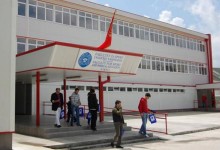
Faculty for Sport and Physical Education / COLLEGE FOR SPORTS TRAINING / FUNDAMENTALS OF PHYSIOLOGY AND PHYS. OF SPORTS I
| Course: | FUNDAMENTALS OF PHYSIOLOGY AND PHYS. OF SPORTS I/ |
| Course ID | Course status | Semester | ECTS credits | Lessons (Lessons+Exercises+Laboratory) |
| 8170 | Obavezan | 3 | 5 | 2+1+0 |
| Programs | COLLEGE FOR SPORTS TRAINING |
| Prerequisites | There are no prerequisites required for signing up for this course |
| Aims | The aim of the course is to acquaint students with the physiology of human body |
| Learning outcomes | : Upon the completion of this course, the student will show the ability to: 1. Master the basic principles of cell physiology and its functions in human beings; 2. Explain the structure and function of applied physiology of sport; 3. Use physiological aspect of locomotor system in creating the teaching and training process; 4. Analyse the adaptation of cardiorespiratory and urogenital system to the physical exertion and sports training; 5. Value morphological and functional characteristics of oxygen consumption |
| Lecturer / Teaching assistant | Prof. dr Miroslav Kezunović ; dr sci med Zoran Terzić |
| Methodology | Lectures, exercises, exams, consultations |
| Plan and program of work | |
| Preparing week | Preparation and registration of the semester |
| I week lectures | Introduction to human physiology. |
| I week exercises | Introduction to human physiology. |
| II week lectures | The cell and its functions. Homeostasis, body fluids. |
| II week exercises | The cell and its functions. Homeostasis, body fluids. |
| III week lectures | Structure and function of a cell membrane. Membrane and action potential. |
| III week exercises | Structure and function of a cell membrane. Membrane and action potential. |
| IV week lectures | Physiology of the locomotor system. Muscular tissue. Muscle contraction and hypertrophy. |
| IV week exercises | |
| V week lectures | The impact of sports training on muscles and muscular functioning. Fatigue. |
| V week exercises | The impact of sports training on muscles and muscular functioning. Fatigue. |
| VI week lectures | Physiological aspect of the bone tissue: types, composition and role. |
| VI week exercises | Physiological aspect of the bone tissue: types, composition and role. |
| VII week lectures | The impact of sport on the bone tissue. |
| VII week exercises | The impact of sport on the bone tissue. |
| VIII week lectures | The composition and role of blood. Blood groups, immunity. Coagulation. |
| VIII week exercises | The composition and role of blood. Blood groups, immunity. Coagulation. |
| IX week lectures | Circulation. |
| IX week exercises | |
| X week lectures | Mid-term exam |
| X week exercises | Mid-term exam |
| XI week lectures | Physiological structure of the cardiac muscle. Regulation of the heart’s function. |
| XI week exercises | Physiological structure of the cardiac muscle. Regulation of the heart’s function. |
| XII week lectures | Principles of hemodynamics. |
| XII week exercises | Principles of hemodynamics |
| XIII week lectures | Physiological causes of shock. Adaptation of the cardiovascular system to the exertion and exercising. |
| XIII week exercises | Physiological causes of shock. Adaptation of the cardiovascular system to the exertion and exercising. |
| XIV week lectures | Respiratory system. Structure and function. Oxygen debt. Respiratory membrane. |
| XIV week exercises | Respiratory system. Structure and function. Oxygen debt. Respiratory membrane. |
| XV week lectures | The mechanics of breathing. Lung volumes and capacities. Breathing during muscular activity. |
| XV week exercises | The mechanics of breathing. Lung volumes and capacities. Breathing during muscular activity.Regulating the acid-base balance. The reproductive system. Final exam |
| Student workload | Lectures and final exam: 5.20 hours x 16 = 85 hours Necessary preparations before the start of the semester 2 x (5 hours 20 min.) = 10 hours 40 min. Total hours for the course: 4x30 = 120 hours Additional work for the course from 0 to 24 hours and 20 min. Structure of the load: 85 hours (teaching) + 10 hours 40 min. (preparation) + 24 hours 20 min. (additional work) |
| Per week | Per semester |
| 5 credits x 40/30=6 hours and 40 minuts
2 sat(a) theoretical classes 0 sat(a) practical classes 1 excercises 3 hour(s) i 40 minuts of independent work, including consultations |
Classes and final exam:
6 hour(s) i 40 minuts x 16 =106 hour(s) i 40 minuts Necessary preparation before the beginning of the semester (administration, registration, certification): 6 hour(s) i 40 minuts x 2 =13 hour(s) i 20 minuts Total workload for the subject: 5 x 30=150 hour(s) Additional work for exam preparation in the preparing exam period, including taking the remedial exam from 0 to 30 hours (remaining time from the first two items to the total load for the item) 30 hour(s) i 0 minuts Workload structure: 106 hour(s) i 40 minuts (cources), 13 hour(s) i 20 minuts (preparation), 30 hour(s) i 0 minuts (additional work) |
| Student obligations | 5 credits x 40/30 = 5 hours 20 min. Structure of the load: 2 hours of lectures 1 hour of exercises 2 hours 20 min. of independent work including consultations |
| Consultations | : According to the previously set terms. |
| Literature | Gayton; Medicinska fiziologija ; M.Kezunović i sar. Osnovi fiziologije i fiziologija sporta; Drecun M. i sar. Praktikum iz fiziologije |
| Examination methods | - Attendance 6 points - Participation 4 points - 2 exams 20 points each - Final exam: 50 points The passing grade is achieved if the student cumulatively earns 51 points and regularly attends the classes. |
| Special remarks | The methodological units for practical classes correspond to the methodological units for theoretical classes. |
| Comment |
| Grade: | F | E | D | C | B | A |
| Number of points | less than 50 points | greater than or equal to 50 points and less than 60 points | greater than or equal to 60 points and less than 70 points | greater than or equal to 70 points and less than 80 points | greater than or equal to 80 points and less than 90 points | greater than or equal to 90 points |
Faculty for Sport and Physical Education / COLLEGE FOR SPORTS TRAINING / FUNDAMENTALS OF PHYSIOLOGY AND PHYS. OF SPORTS II
| Course: | FUNDAMENTALS OF PHYSIOLOGY AND PHYS. OF SPORTS II/ |
| Course ID | Course status | Semester | ECTS credits | Lessons (Lessons+Exercises+Laboratory) |
| 8171 | Obavezan | 4 | 5 | 2+1+0 |
| Programs | COLLEGE FOR SPORTS TRAINING |
| Prerequisites | There are no prerequisites required for signing up for this course |
| Aims | In this course students are acquainted with the scientific and professional knowledge of the physiology of the human body. |
| Learning outcomes | 1. Know the basic terms of structural and functional organisation of the central and peripheral nervous system; 2. Describe the functioning and organisation of the endocrine system, as well as the endocrine response to sports training; 3. Analyse the role of the sensory system in sports exertion. 4. Research the basic characteristics of the impact of physical activity during growth and development, sports activity in women and the impact on health. 5. Test and analyse the recovery of the metabolic systems after exercising. |
| Lecturer / Teaching assistant | Prof. dr Miroslav Kezunović ; dr sci med Zoran Terzić assistant. |
| Methodology | Lectures, exercises, consultations, individual realisation of tasks. |
| Plan and program of work | |
| Preparing week | Preparation and registration of the semester |
| I week lectures | Structural and functional organisation of the central and peripheral nervous system. |
| I week exercises | Structural and functional organisation of the central and peripheral nervous system. |
| II week lectures | The neuron. |
| II week exercises | The neuron. |
| III week lectures | Synapse and transmission of electric potentials. Neuromuscular connector. |
| III week exercises | Synapse and transmission of electric potentials. Neuromuscular connector |
| IV week lectures | Autonomous nervous system. |
| IV week exercises | Autonomous nervous system. |
| V week lectures | Neurophysiology of the spinal cord. Reflexes. |
| V week exercises | Neurophysiology of the spinal cord. Reflexes. |
| VI week lectures | Function and organisation of the endocrine system. Hypothalamus. |
| VI week exercises | Function and organisation of the endocrine system. Hypothalamus. |
| VII week lectures | Hypophysis. Gonads. |
| VII week exercises | Hypophysis. Gonads. |
| VIII week lectures | Thyroid and Parathyroid glands, pancreas and the adrenal gland. Metabolism. |
| VIII week exercises | Thyroid and Parathyroid glands, pancreas and the adrenal gland. Metabolism. |
| IX week lectures | Endocrine response to the sports training. |
| IX week exercises | Endocrine response to the sports training. |
| X week lectures | Recovery of metabolic systems after exercising. |
| X week exercises | Recovery of metabolic systems after exercising. |
| XI week lectures | Mid-term exam S |
| XI week exercises | Mid-term exam S |
| XII week lectures | ensory system. Eyesight. Hearing and balance. |
| XII week exercises | ensory system. Eyesight. Hearing and balance. |
| XIII week lectures | The sense of taste and smell. Skin – protective, sensory and regulatory function. |
| XIII week exercises | The sense of taste and smell. Skin – protective, sensory and regulatory function |
| XIV week lectures | Physiology of the digestive system. Chemical and mechanical processes of digestion. |
| XIV week exercises | Physiology of the digestive system. Chemical and mechanical processes of digestion. |
| XV week lectures | Nutrition of athletes. Physical activity during growth and development. Sports activity in women and its impact on health. Control of functional abilities. Athletes and stimulants. Second exam |
| XV week exercises |
| Student workload | min. Necessary preparations before the start of the semester 2 x (5 hours 20 min.) = 10 hours 40 min. Total hours for the course: 5x30 = 150 hours Additional work for the course from 0 to 26 hours (the remaining time of the two first elements to the total workload for the course 120 hours) Structure of the load: 150 hours 40 min. (teaching) + 13 hours 20 min. (preparation) + 26 hours (additional work) |
| Per week | Per semester |
| 5 credits x 40/30=6 hours and 40 minuts
2 sat(a) theoretical classes 0 sat(a) practical classes 1 excercises 3 hour(s) i 40 minuts of independent work, including consultations |
Classes and final exam:
6 hour(s) i 40 minuts x 16 =106 hour(s) i 40 minuts Necessary preparation before the beginning of the semester (administration, registration, certification): 6 hour(s) i 40 minuts x 2 =13 hour(s) i 20 minuts Total workload for the subject: 5 x 30=150 hour(s) Additional work for exam preparation in the preparing exam period, including taking the remedial exam from 0 to 30 hours (remaining time from the first two items to the total load for the item) 30 hour(s) i 0 minuts Workload structure: 106 hour(s) i 40 minuts (cources), 13 hour(s) i 20 minuts (preparation), 30 hour(s) i 0 minuts (additional work) |
| Student obligations | 5 credits x 40/30 = 6 hours 40 min. Structure of the load: 2 hours of lectures 1 hour of exercises |
| Consultations | According to the previously set terms. |
| Literature | : Gayton; Medicinska fiziologija; M.Kezunović i sar. Osnovi fiziologije i fiziologija sporta ; Drecun M. i sar. Praktikum iz fiziologije |
| Examination methods | Attendance 6 points - Participation 4 points - 2 exams 20 points each - Final exam: 50 points The passing grade is achieved if the student cumulatively earns 51 points and regularly attends the classes. |
| Special remarks | The methodological units for practical classes correspond to the methodological units for theoretical classes. |
| Comment |
| Grade: | F | E | D | C | B | A |
| Number of points | less than 50 points | greater than or equal to 50 points and less than 60 points | greater than or equal to 60 points and less than 70 points | greater than or equal to 70 points and less than 80 points | greater than or equal to 80 points and less than 90 points | greater than or equal to 90 points |