

ROBONETCBC Info Day in Kotor: Innovative Robotics and Sensor Networks for Air and Marine Ecosystem Monitoring



.jpg&h=1000)
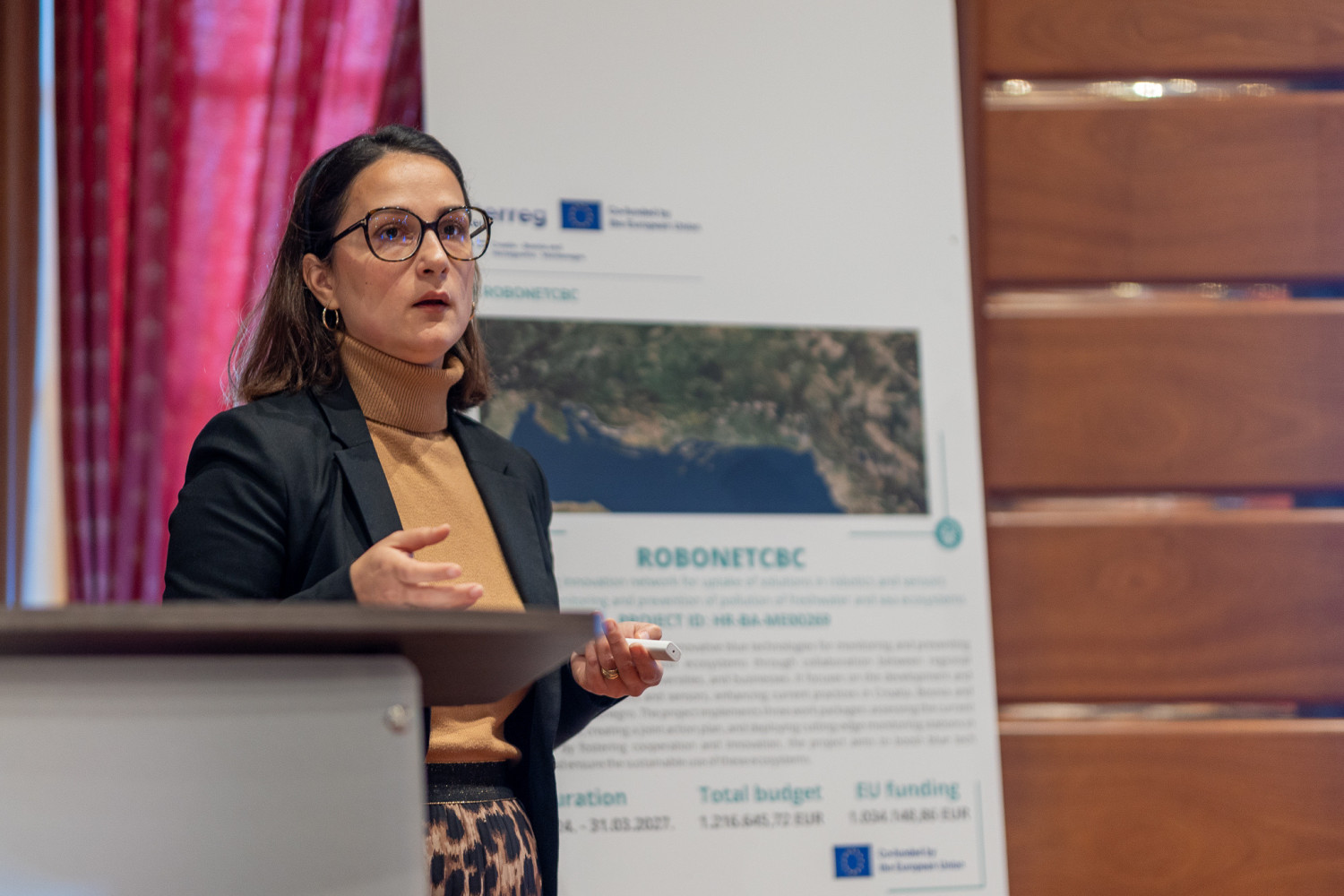
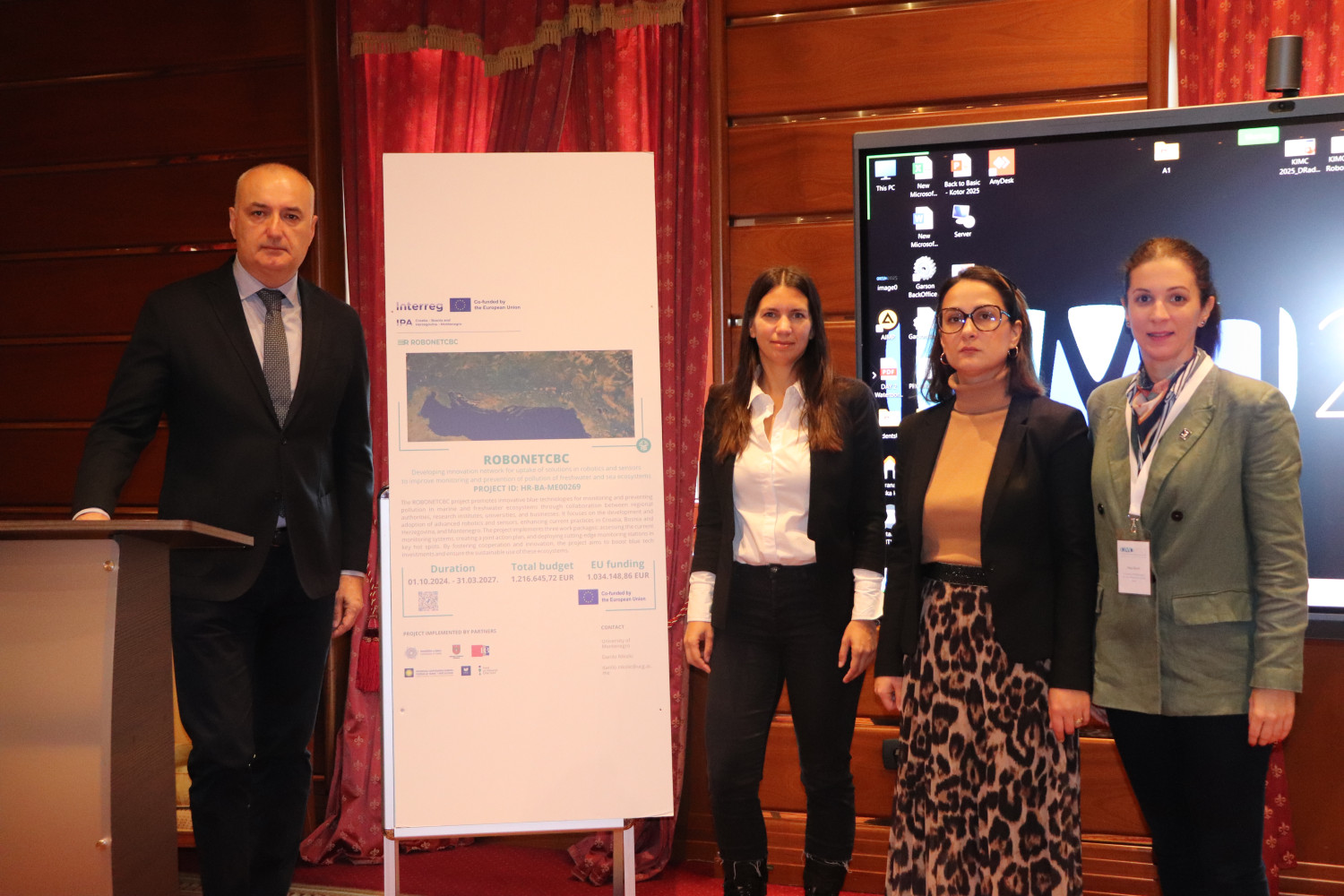
The Faculty of Maritime Studies Kotor of the University of Montenegro, in cooperation with international partners on the project “Developing innovation network for uptake of solutions in robotics and sensors to improve monitoring and prevention of pollution of freshwater and sea ecosystems – ROBONETCBC”, organised a one-day event – the “ROBONETCBC Info Day” in Kotor. The central part of the programme was delivered as a specialised thematic session within the international conference KIMC 2025, dedicated to the results of project activities in the field of applying robotics and sensors in the monitoring of air quality and the marine environment.
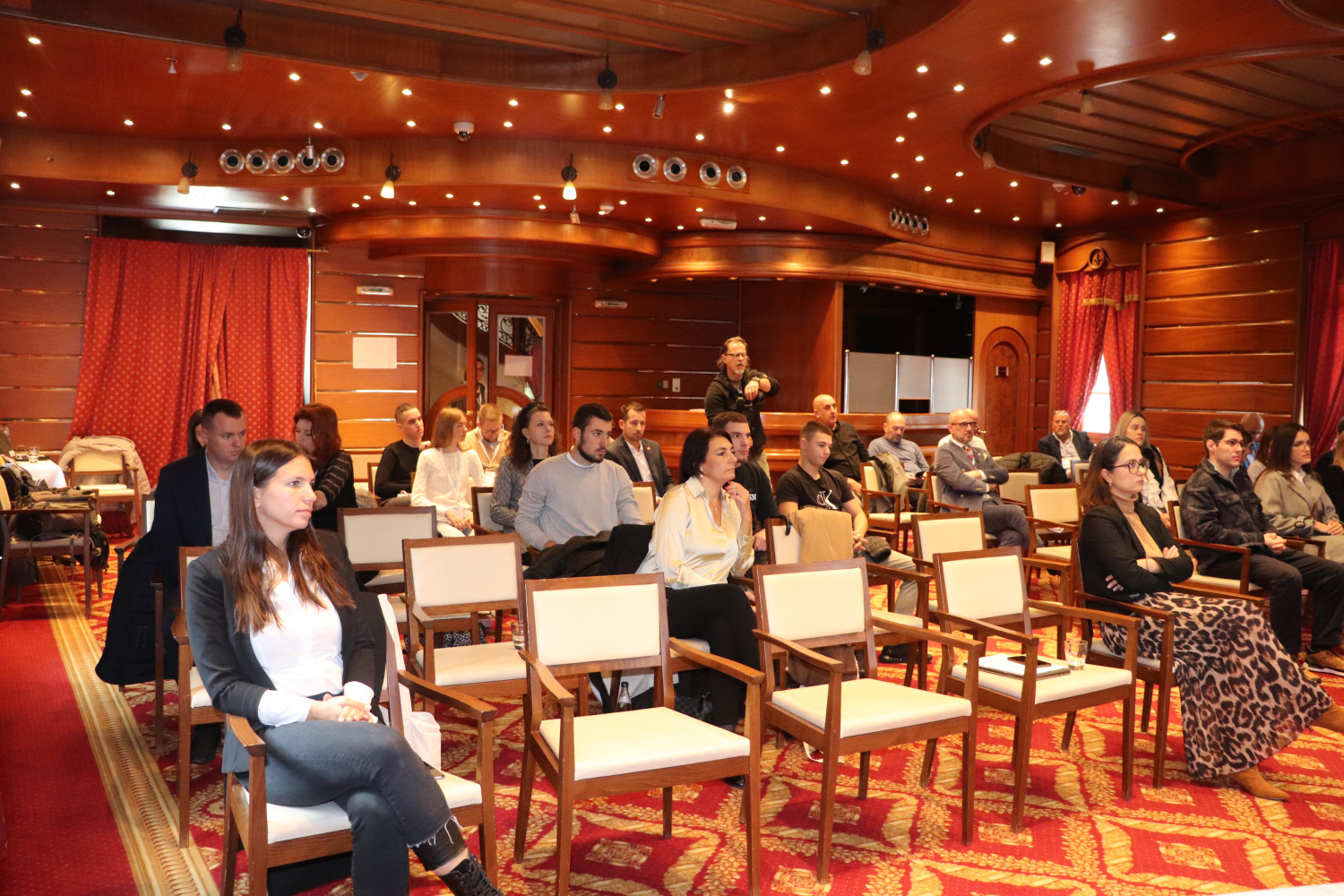
The event was held at the Cattaro Hotel in the Old Town of Kotor, on Friday, 28 November 2025, from 8:15 to 9:45, accompanied by additional discussions and networking throughout the day. The gathering brought together representatives of national and local public authorities, non-governmental organisations, higher education and research institutions (HE&RI), small and medium-sized enterprises, business support organisations (BSO), other service providers and the interested general public, thereby directly fulfilling the project task of organising a one-day event for all target groups.
The primary objective of the Info Day was to present the results of the ROBONETCBC project financed under the Interreg IPA HR-BA-ME programme, to demonstrate the potential for applying advanced sensor solutions and monitoring networks, and to define, through dialogue with stakeholders, priorities for enhancing cross-border cooperation in the field of protection of freshwater and marine ecosystems.
The technical part of the session was structured around three research presentations covering air quality monitoring, the impact of biomass burning aerosols, and baseline measurements in ports:
-
“Air Quality Monitoring in Kotor Bay Using a Network of Medium-Cost Sensors” – Radmila Gagić & Danilo Nikolić
This paper presented the results of establishing and operating a network of medium-cost air quality sensors in Kotor Bay. The advantages of such sensor networks in terms of spatial resolution, continuity of measurements and the ability to detect episodes of elevated pollution more rapidly than traditional reference stations were highlighted. The first measurement results were shown, as well as the way in which the data obtained are integrated into the broader framework of the ROBONETCBC project, through the development of innovative solutions for monitoring and preventing pollution. (The paper was presented by Radmila Gagić) -
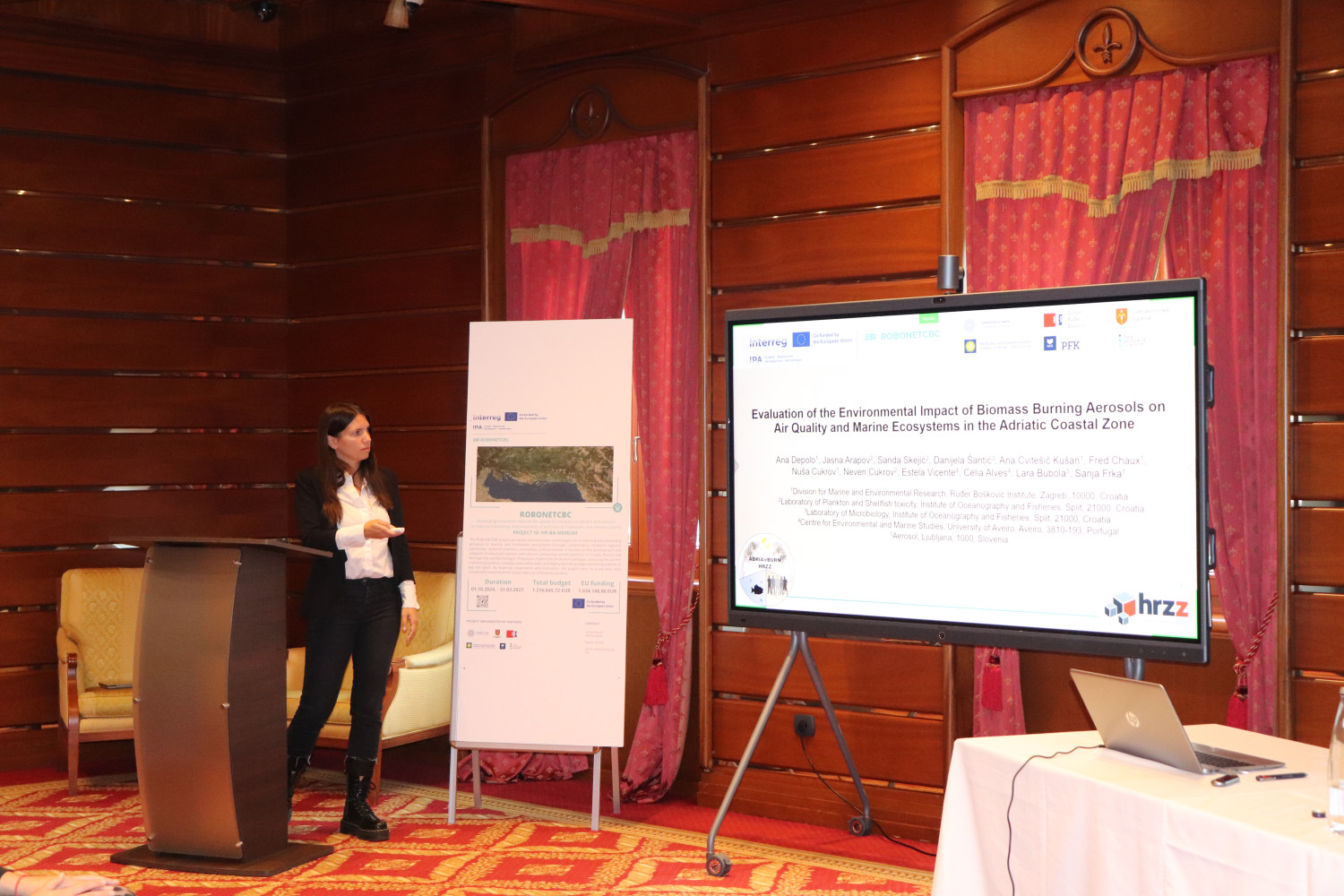
“Evaluation of the Environmental Impact of Biomass Burning Aerosols on Air Quality and Marine Ecosystems in the Adriatic Coastal Zone” – Ana Depolo et al.
The second presentation focused on assessing the impact of aerosols originating from biomass burning on air quality and the marine ecosystem in the Adriatic coastal zone. The authors presented measurement results and laboratory analyses indicating the cross-border nature of pollutant transport, as well as the need for an integrated approach to monitoring atmospheric and marine parameters. This paper demonstrated how advanced analytical and sensor methods can contribute to a better understanding of interactions between the atmosphere and the sea, in line with the objectives of the ROBONETCBC innovation network. (The paper was presented by Nuša Cukrov) -
“Port Baseline Survey (PBS) and Monitoring Programme in the Port of Bar” – Dragana Drakulović, Aleksandra Huter, Sandra Jokanović & Danilo Nikolić
The third paper was devoted to the Port Baseline Survey (PBS) and the establishment of a monitoring programme in the Port of Bar. Methods for collecting data on the quality of marine sediment, water and biota were presented, as well as the definition of key environmental status indicators in the port. Particular emphasis was placed on the importance of baseline (reference) measurements as a starting point for the subsequent application of advanced robotic and sensor systems, and for assessing the effects of future measures to reduce pollution in port areas. (The paper was presented by Dragana Drakulović
In the discussion following the presentations, participants highlighted the need for further development of a cross-border cooperation network in the field of monitoring, better data exchange between institutions from Croatia, Bosnia and Herzegovina and Montenegro, and greater involvement of small and medium-sized enterprises in the development and implementation of innovative sensor and robotic solutions.
It was concluded that the results presented at the “ROBONETCBC Info Day” in Kotor confirm the importance of the project for improving systematic monitoring and prevention of pollution in freshwater and marine ecosystems in the Adriatic region, and that they provide a solid basis for future projects, investments and policies in the field of environmental protection based on data and innovation.